Falls are Game Changers for Older Adults

FallRisk

I know you have heard or seen a lot about the risk of a fall. It seems like the smallest of worries when you are dealing with concerns over personal and financial safety.  However, it looms as one thing that changes EVERYTHING for many of the clients with which I work. It was also the pivotal event that preceded my mom’s death.

For my mom, ending up the Emergency Room after a fall in her Memory Care community resulted in another small stroke (or maybe two). While the doctor suggested surgery, I struggled with the idea that if she emerged from surgery, she would actually be cognitively worse and have to manage through the pain and recovery. She didn’t recognize me at the hospital and she was no longer swallowing her food. While the medical solution was surgery, I was advised to tell them she would prefer to “let nature take its course.” The initial tests confirmed that she was too frail to survive the surgery and she moved into hospice care. Unfortunately, my experience is more common than most realize.

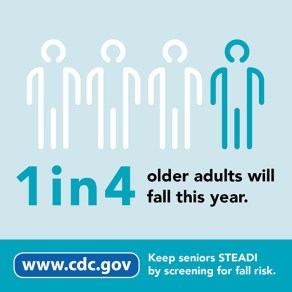
According to The Washington Post, “researchers found that frail older women who broke hips were unlikely to fully recover their prefracture qualify of life, even after as many as 10 years.” Another study from the Journal of General Internal Medicine found that only 31 percent of the cohort they followed after breaking a hip recovered to their prefracture ability. They did find that many of the adults were already frail and had trouble walking, dressing, or bathing before the fall.

There are several things that can be done to minimize the fall risk and include:

  • Get exercise. A variety of types of exercise can help from strength training to aerobic activities. Getting someone who has never exercised to exercise can be a fools errand. My mother never exercised but was very active and loved to walk, so we worked to get regular walks. When she needed to move into a Memory Care community, we found one that allowed her to freely (and safely) walk the grounds.
  • Take Fall Prevention Measures. Remove trip hazards like area rugs and keep the floor tidy. This is a ‘no brainer’ that can be harder to manage if your loved one is resistant to give up the rugs they have always had in the hallway, or if they don’t value a tidy room.
  • Eat Well. From addressing any vitamin deficiencies like osteoporosis or neuropathy to maintaining a healthy weight — all are contributing factors to better well-being and fitness.
  • Stop Smoking. Apparently they have found that smoking delayed the heal of a fracture!

I figured being over-prepared is the best defense. The smallest of falls can be the one event that blows up all of your well-made plans. Maybe it’s time to consider how to incorporate ways to combat fall risks into your plans. Recommended. 

Is “rational suicide” the only option?

death

For those of us caring for loved ones with dementia, we are often fighting a battle to honor their wishes and ensure the best life they can lead. My mother started joking about how we should take her out in my early 20s. I lived near my parents and saw them two and three times a week as an adult. My life as a caregiver started in my late 40s.

My Mom was the most vocal. She would often see something and say “If that happens to me, take me out.”  She gave me choices over the years from “push Granise’s chest on me” to “put a pillow over my head”.

As the dementia started to win, I had many discussions with my siblings over my angst. Mom was very clear, but I had no way to honor her wishes … without possibly going to prison.

I have talked about many of the choices we can make to better align with a loved ones wishes previously, but am always happy to share for anyone struggling with something right now. Please know you will make the best choice you can with the information you have today. Those you are caring for are lucky to have you in their life.

If you have something you’d like to discuss, put your notes in comments and I will respond (just put PRIVATE if you do not want it shared as a comment on this post).

Apparently, there is a growing movement for “rational suicide”. You can learn more about this in an article from The Washingon Post. I have internally grappled with this idea for years. I applaud the move to assisted suicide, but someone with any form of cognitive impairment doesn’t qualify. I think this is incredibly unfair, but have no idea how we solve it.

I in no way want to diminish the move to help individuals that are suffering with suicidal thoughts. I believe it is a mental illness that has sadly hit very close to my own home.

So now I feel compelled to give air to this topic. We should not be forcing people to commit “rational suicide” if they have passed a threshold in which everyday living requires them to rely on others to be. I know I would LOVE an option as would many of the individuals and families I work with daily.

Anyone out there with some options? Wished. 

Do I schedule the colonoscopy?

poop in box memeI remember the internal debate I struggled with as my parent’s cognitive decline progressed. When they first moved into Assisted Living, they were scheduled for visits with the dentist. I knew it had been at least two years since their last exam and with a dentist visiting the facility, it was simple enough to have the staff take them down when it was time for their appointment. However, my parent’s both refused to see the dentist. We tried three different times and each time one or both of them dug in their heels and declared that they no longer needed to get their teeth cleaned. Six months later, my Dad was diagnosed with a tumor on his tongue. Would that dental visit have eased his pain or changed the outcome?

I consider this experience as one of my clients, an 85 year old who has been diagnosed with Alzheimer’s and is managing in her own home, was recommend to be screened for colon cancer using the new Cologuard kit. Cologuard is a do-it-yourself, mail-in DNA test that helps detect some colon cancers. Having just experienced this test myself, it’s not as simple as on would imagine, and does require that it be shipped back in a timely manner once you “collect” your sample. I have to say, I had a lot of fun joking around about the process and the “package” I needed to ship. Sorry to those of you who don’t like potty humor, I am a self-confessed big fan of it.

I brought up the topic to my husband because I found it tricky and wasn’t sure my client could manage the steps for the do-it-yourself part. You basically need to preset the kit in the commode for the collection, then take a sample and ship both the small sample and collection which requires a few extra steps before sealing the package. Once your package is sealed, it needs to be shipped back in 24 hours using UPS. Sounds easy, but since I just did it knew it took a little planning to complete.

As I’m wondering to my husband if my client can follow the steps, and ensure it gets shipped back in a timely manner — he is wondering what the family would do if they found out mom has colon cancer. He felt that he would probably be skipping his testing when he is 85 and battling other health issues.

Are there some things we need not test for once we reach a certain health status? Is the guide really to focus on those things that can prevent other health issues like a dental visit to maintain good oral hygiene versus testing for a cancer that may kill you when you are 85 years old? There is only the answer that is right for you.

I wondered if my Dad’s refusal to see the dentist was because he knew something was wrong and didn’t want anyone to find out or intervene. I do recall sitting with his primary care physician a few months before the tumor was diagnosed while she opened up his month and checked his teeth and tongue to see if she could figure out why he was drooling more. They chalked it up to swallowing issues related to his Alzheimer’s.

When it’s our job to monitor the health and well-being of our loved ones, when do we choose to stop the testing?  I think for all of us that answer is very different. Hopefully, you got a sense of the choices for end-of-life care your loved ones would make and can use that as your guide. Caregiving ain’t for sissies. Convinced. 


I’m ready to die

shouldistayMy client just shared this with me today. She’s 92, and the last few months have been difficult. She’s been having hallucinations, phantom pains, and doesn’t quite remember much about her past. While it’s sudden delivery surprises me, I also recognize that I would love for us all to be able to reach this point and gracefully exit.

She is always a delight to visit. She thanks me for helping and she follows along as I lead small talk about her son, her past, and the activities in her community I know she enjoys. So this statement, so definitive and bold, startled me.

She has enjoyed a wonderful life. May we all be able to choose our exit. I know my mom desperately wanted to avoid ever having her kids help care for her. I tell myself I hope I will be able to know when I’m taking more than I’m giving and gracefully end my journey on planet Earth … but I can’t imagine how to ever make that happen. Wished. 


A Funny Video on How to Start the Conversation about End of Life Wishes

We avoid this conversation, but I know the guilt caregivers feel when they aren’t sure if they are doing the right thing for their loved ones. It’s time for us to start having the discussion about end of life wishes since 9 out of 10 American’s will need someone to speak on our behalf before the end of our life according to a joint study done by the National Institutes of Health and Veteran’s Affairs.

Watch this funny video from The Conversation Project to get started. 

This Thanksgiving or at your next family gathering, I hope you will carve out some time to start the conversation with your loved ones on how you plan to live the rest of your life. The kits listed below offer some inclusive ways to begin this discussion with your loved ones.

I am lucky my parents shared their thoughts with me. It made a difficult journey a little easier. However, I had many choices to make that were gut-wrenching that we never covered, but the fact that my parent’s made it clear that they wanted quality of life over quantity of life made those difficult decisions easier for me and my siblings.

They have both a general conversation kit, and also one tailored for individuals with Dementia 

I hope you can find a way to bring these resources to your own family. Hoped. 


The finality of the funeral

funeral (2)

Arlington National Cemetery does a fantastic job of burying those individuals who have served our country. I appreciated the time between the passing of each parent and their burial. However, it was hard to help my Mom who had multi-infarct dementia remember that Dad had passed away.

Her calls asking me to give her a ride to visit Dad were heartbreaking. I broke down in tears on the first few. I eventually found a way to choke out a response that didn’t end in both of us crying on the telephone. I was thankful that for whatever reason, we had taken a picture of us (mom, me and my three siblings) around my deceased dad in his hospital bed. I printed that gruesome picture and posted it in my Mom’s room with a note about the event so she had a reminder that we were all there together. She was ready for the burial service once it arrived.

I was relieved to pass the burial milestone for both parents. I knew it meant I could finally finish the long grieving process that began when I recognized that their dementia’s were stealing them away from me bit-by-bit. The reality that we have to watch as well as care for our loved ones with dementia is a cruel fate for everyone. May we one day have a cure for the sneaky beast called dementia. Hoped. 

How do I help Mom remember Dad is Dead?

cole indoor 2017 - ocean breeze 4x4The weeks after my Dad died were one of the worst transitional periods in navigating as a Caregiver for my Mom with Vascular Dementia. I was shocked and devastated at his quick decline and death, and my Mom, who no longer had any short-term memory, kept asking for me to take her to visit him.

I didn’t want to have her keep reliving his death, but I felt like I was always having to let her know he passed away. She was living in Assisted Living with him and really liked it there when he was alive. However, she didn’t do well after he died. She was out looking for him in the community and getting into fights with the other residents.

What I realized was that there were many things I could do to help her know about his death and help her try and process the grief. First, and I’m still not sure why we did this, but after dad died, we all gathered around his body and had the hospice nurse take a picture. I printed out copies and put them in her apartment with the date so she could see we were all there at his death and had said our last good-bye. Remarkably, this really helped her process his death. She could see all the kids were there and by her side.

Once the obituary ran, I put those copies up along with the final picture. After the burial service at Arlington Cemetery, I added more pictures of the service and all of us together. I wanted her to know she wasn’t alone in her grief.

Dementia is such a cruel disease.

I remember talking with my mom over a year later and telling her about watching my son at a track meet. My Dad was a hurdler for West Point. She had one of those out of the blue clarity moments and says “Oh Vald, would have loved to be there to see him run!” I hadn’t heard my Mom talk about Dad for months. I was elated and gut-punched with grief all at once. Remembered.  

Is keeping Mom at home the right choice?

homesweethomeI know how often I second-guessed the choice of where my Mom lived. My siblings and I often discussed how we could better use the money being spent on their care community that never seemed to be the right fit for them once their dementia really changed their thinking and behavior.

Now that I work with families who are usually not in the metro-DC area and want someone to help their loved one who is still living in their home, I wonder when is it the right time to consider moving them into a community.

In general, the earlier the move for someone with cognitive issues, the better. They can make friends, find activities they enjoy, and benefit from the social activities that can keep the cognitive decline at bay by staying engaged.

However, I understanding viewing the move from their beloved home as a major issue that most older adults decline and often fight against.

I battled with myself the last year of Mom’s life. Should we move her into our home, even though she made it clear over decades that she never wanted to live with one of her children? I knew it would be a major ask of my family to move her into our home. She would have needed someone at the home to help her when we were working. I realized later that she also would not have had the benefit of all of the activities for engagement within the community. I wish I could have played out both options and reported back to you.

Every family needs to make the best choice for your circumstances. Please know that the fact that you are involved and engaged is more than most adults with dementia receive. Many families detach, others fight over the choices, and for dozens of other reasons, their loved ones don’t have the benefits of an advocate who is watching out for them. Weigh your options but be satisfied that you are making the best decision you can with the information you have right now. Considered. 

Advance wish planning for dementia can be a godsend to your loved ones

endoflifeFor those of us who are caring or who have cared, we know how many choices we are faced with and many are things never discussed.

I felt like the 20 years of my mom telling me she would never want to live with one of her adult children, meant I should never move her into my home. Even after Dad died and she was struggling. I emotionally bounced all over in considering what was the right next move for mom.

While this isn’t legally binding apparently outside of the state of Washington, at least it is something we can do to help offer more guidance for someone who might need to advocate for us. I did Five Wishes and wrote out a letter in addition to my Medical Power of Attorney, but this document has even more specific choices. The Medical Power of Attorney is legally binding, but I felt like the questions in Five Wishes and my letter would offer some insight if the choices got hairy.

When my dad in a moderate stage of Alzheimer’s is diagnosed with cancer … we believed we made the right choice to move him into hospice care. When mom broke her hip, suffered another stroke and we were asked to lift her “Do Not Resuscitate” order, I felt confident that letting nature it’s course and moving her into hospice care was also the right choice.

However, I know there are a lot of families who are never sure they made the right choice. In hopes of making sure your wishes are met, and to minimize the doubt that your loved ones might have in making a decision for you, I hope you will consider filling this out now.

Dementia Advance Care Directive

It’s easier to make the choices now when there is no diagnosis or decision in front of you. You can ALWAYS revisit, but it’s good to do this years before it may ever be needed. And it will benefit everyone. Recommended.


Carve out Time at Thanksgiving to Talk with Family and Friends

carveouttimeThe fact that 9 out of 10 American’s will need someone to speak on their behalf before the end of their life was documented in a joint study done by the National Institutes of Health and Veteran’s Affairs.

Do yourself and your loved ones a favor by having a discussion about this FACT before you are faced with the reality. Those that step in to help will face a lifetime of guilt and doubt if you have not been clear about end-of-life wishes.

For those of us who have cared for someone with dementia, what we know is that there are years of choices to be made well before end-of-life that can be just as challenging. Telling someone I want to “die in my home” is probably not always practical, so offering some more guidance on ways you would like to spend your time if you have limited mobility or cognitive impairment.

What we know now is that isolation is a very real health issue. What is your social network and how will you be able to stay active if you can no longer drive yourself? What I have seen is that when many of my clients reach their 80s, they are finding that they no longer have local friends who can give them rides if they are still in the area. It get’s hard to make new friends when you aren’t getting out and trying new things.

This Thanksgiving, I hope you will carve out some time to start the conversation with your loved ones on how you plan to live the rest of your life. I’ve included three great resources below, and hope you might start by sharing with friends and family your ideas about how you will spend your time in your 60s and 70s; where you plan to be living and how you will be spending your time.

I am lucky my parents shared their thoughts with me. It made a difficult journey a little easier knowing that we did or are doing what we can to honor their individual wishes.

Hopefully, by reading one of these books you will get some ideas on how to best engage in a positive conversation with your loved ones this Thanksgiving. Wished.  

ADDITIONAL RESOURCES 

Being Mortal: Medicine and What Matters in the End (B&N $8.93) by Atul Gawande

It’s $11.00 at Amazon and free shipping for Prime members. 
In Being Mortal, bestselling author Atul Gawande tackles the hardest challenge of his profession: how medicine can not only improve life but also the process of its ending. Medicine has triumphed in modern times, transforming birth, injury, and infectious disease from harrowing to manageable. But in the inevitable condition of aging and death, the goals of medicine seem too frequently to run counter to the interest of the human spirit.

AARP Roadmap for the Rest of Your Life: Smart Choices About Money, Health, Work, Lifestyle … and Pursuing Your Dreams by Bart Astor
Life after 50 isn’t what it used to be. The rules have changed. No more guaranteed pensions, retiree health plans, or extensive leisure and travel. It’s time to forge new paths and create innovative models. That’s where the AARP Roadmap for the Rest of Your Life comes in. Bart Astor, author of more than a dozen books, offers a comprehensive guide for making lifestyle decisions, growing your nest egg, and realizing your goals. It’s a positive read I highly recommend.

The Conversation Starter Kit
If you want to be the expert on your wishes and those of your loved ones, not the doctors, nurses, or end-of-life experts, check out this free resource (donations accepted) that includes easy discussion starters for the coming holiday. This doesn’t have to be a gloomy conversation. I was lucky my parents shared their wishes with me.

The Long Gray Line Visited My Dad in Hospice

kayanddad
One of my favorite pictures with my Dad at Fort Belvoir prepping for a parade.

Today The Washington Post included a story from a son who watched as his mom started to talk to her dead relatives when she was in hospice care. It freaked him out, as one would expect. To me, it brought a smile as I recalled the final night of my dad’s life.

Let me explain …

My dad was moved into a hospice facility when we couldn’t arrange the right care for him in his retirement community. He was living with my mom who had vascular dementia and didn’t want any help in the apartment, but dad needed constant support to keep him comfortable.

I end up in the hospice facility with dad in what turned out to be the final night of his life. He was medicated for comfort, but would have periods of wakefulness. During this time, I watched as my dad was looking right to left and saluting. I had seen him do this many times before–he was saluting soldiers marching past his bed that I could not see.

What I recognize now, but apparently instinctively felt, was that my dad was very close to death. My siblings will recall my angry phone call which was very much out of character asking them why they weren’t bedside.  To be fair, my siblings had been with dad all day and helped move him into the hospice facility. None of us expected his stay to be so short.

I look back on that experience and agree with the author of the Post article. I believe my dad got comfort from seeing as West Point describes as The Long Gray Line of soldiers marching by as he was preparing to join them. Remembered.