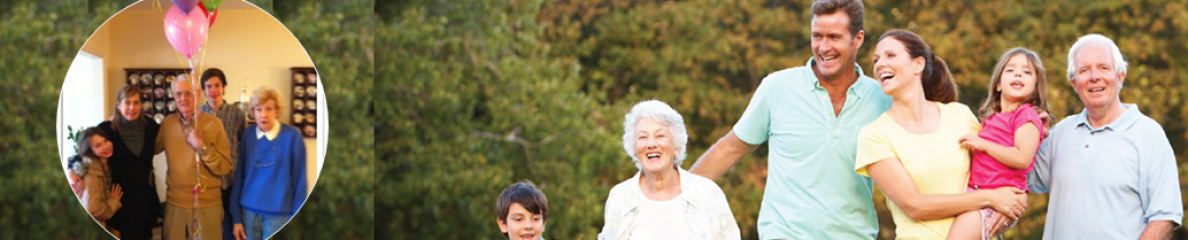
Ask your friends how they are spending their retirement – Healthy Habit 11

successful aging

I have a neighbor that is spending time in a southern location and loving it. She’s quite content and wonders why the rest of us are still working. I am actually frightened of the idea of having unstructured days without a goal.

In working with older adults, and after watching how “retirement” dulled my parents zeal, I’m wondering what the rest of my life will look like. I believe the brain is a muscle and you either use it or you lose it. I know it’s not that simple, but as my friends are all starting to plan and migrate off into varied paths after full-time careers, they are all going to have to sit through my Q&A.

I also have a variety of adults over 70 and 80 that are community dynamo’s I hope I can emulate as I continue to circle the sun.

What I have witnessed is that most of the individuals I’d like to follow are engaged in their community in meaningful ways. While they also tend to disappear for a few months on some grand excursions, they are also making a difference on a daily basis through volunteer activities, board participation, and even mentoring.

Everyone has a different idea of what the rest of their life should look like, and it seems like we have more choices than ever. I hope you will open your mind and learn what and how those around you area navigating into their 60s, 70s, and 80s.

Not only will you increase your social activity which is a healthy habit, but you will also get the opportunity to expand your vision of what the rest of your life could be. Imagined. 

Make copies of everything in your Wallet: Healthy Habit 10

wallet

Should your wallet ever get lost or stolen, having copies of everything that was in it will minimize your stress. It will save you a lot of time when you need to call to cancel credit cards and follow up to request replacements of medical or insurance cards.

It will help if you make notes on the credit cards in your wallet that are set up for auto-payments for other services. A few things you should know about this:

  • Some credit card companies will ask that you pay for charges made on a lost card if you never called to report it missing. When they added the chip to our credit cards, they now have the ability to know if the credit card was physically used. If your card is not in your possession, but you did not report it missing, the credit card company fairly has the right to hold you liable for those charges.
  • Many larger vendors have dozen’s of 800 numbers linked to the specific credit card account. If you have a copy your card you have quick access to the direct number to report the card lost/stolen as well as the identifying information they may request from you about your card.

If you are incapacitated when your wallet is missing, this gives your loved ones an easy way to step in and help you.

Recently, I had a client whose wallet was stolen while he was in the hospital. Unfortunately, I had not made a copy of everything in his wallet and had to wait until he was well enough to talk through and figure out what he was carrying in his wallet.

It’s now one of the first things I do when I work with a new client now. Warned.

Don’t Smoke, Vape, Juul: Healthy Habit 9

smoking risksThis page has been consciously left blank. We are grown ups and know the myriad of ways smoking impacts our health. Overworked.

See Your Doctor Regularly: Healthy Habit 8

As I was working on my outline for this series, I found out that one of the employees at my hair salon died the night previously. It was a shock to everyone to learn that their colleague who had battled cancer two years previously apparently never followed up on a warning about her kidneys not working efficiently. Instead of seeing a doctor, she was treating herself using over the counter medications.

I get it – life gets busy and sometimes you just go to Dr. Google to see if you can figure out what you can do for something that seems like a minor health matter. However, we need to be in the habit of seeing and following up with at least our Primary Care Physicians. Let a Doctor be the arbiter to decide if we can manage it with over the counter medicines or if we need to see a specialist because it could be a serious issue if ignored.

The health care landscape has changed. Many doctors will tell you they feel like they don’t get enough time with many patients so it is important to see your Physician regularly so they are better able to help you stay in front of any health issues. Whether it’s just to get a simple blood test, or to stay on top of inoculations for Pneumonia or Shingles, I hope you plan on taking the time to invest in your health. An ounce of prevention is worth a pound of cure. Reminded.

Learn Something New Every Year – Healthy Habit #7

I am petrified of retiring. I know that I am most comfortable with a schedule and task to tackle. In working as a Daily Money Manager, I also work with a variety of very accomplished and educated individuals in retirement. While some are happy with their lifestyle, a segment are frustrated or losing step with the pace of change going on around them.

We all need purpose and meaning in our daily lives, and I think in some ways we believe retirement is a time to be free of responsibility … which also contributes back to purpose and meaning. The science seems to tell us that our brain also follows the “use it or lose it” philosophy.

A recent story in Science News reported that Learning Multiple Things Simultaneously Increases Cognitive Abilities in Older Adults. After just 1.5 months learning multiple tasks in a new study, participants increased their cognitive abilities to levels similar to those of middle-aged adults, 30 years younger. Control group members, who did not take classes, showed no change in their performance.

For now, my day job challenges me to problem solve and learn new skills to better run my business. When it’s time to transition from a full-time job, I plan to find at least part-time volunteer and educational opportunities to feed my love of learning … which may also help me maintain my cognitive health.

A Forbes article from earlier this year — Can University Retirement Communities Reverse Aging discusses how a new model for retirement called a “University Based Retirement Communities,” or “UBRCs, is reshaping how many are moving into their post-career lifestyle.

I still have a teen at home and admit that I loved the freedom I had living at college. While I spent a bulk of my time learning, I also had easy access to friends and social engagement. I could see really enjoying a URBC environment when it’s time for me to transition out of running a full-time business.

Most places in the United States have community centers that offer a wide range of classes. In our area, we also have both a local university and local college that offer Lifelong Learning classes for older adults.

You could also combine learning with exercise and try out Yoga, a spin class, or even Pickleball (which is my latest hobby).

As we age and our friends move away or make a celestial departure, it’s hard to build new friendships, but taking a class can at least help you meet people who share a common interest and might be a good way to make a new friend.

There are many benefits to learning at every age. I hope this might give you a reason to try something new. Encouraged.

Break a Habit of Drinking Alcohol #6

drinkinganddementiaOne of my big fears after caring for my parents is that should I lose my short-term memory, I will also lose the ability to know that I have had more than one, or even two drinks.

I have yet to see alcohol on any healthy diet without an asterisk next to it. I’m always intrigued to read interviews with octogenarians (and older) to learn what they chalk up to their healthy aging habits. I swear that a snifter of whiskey or brandy has been in the largest majority of those I have read.

What I do know is that the habit of “quiet hour” honed over 5 decades of marriage became a problem for my parents when they lost their short-term memory. Instead of stopping at one or two drinks, they started to drink more. It was one of the most obvious signs to their adult children that something was different with our parents.

During this period we learned that there is a form of dementia that is a result of alcohol abuse. Drinking and drug use is proven to kill brain cells faster than aging alone. You can learn more about these impacts on this page at the American Addiction Center.

At first we thought my Dad’s quietness and forgetfulness were because of the increased drinking. We later learned that he had Alzheimer’s. Had there been no habit of drinking, we may have gotten to an answer sooner.

During this time, I was able to encourage my parents to purchase Umbrella insurance. I was terrified that their actions could hurt someone and they could lose all of their savings.

If you have a study that shows that alcohol does lead to healthy aging … please share! My belief is that like many things, moderation is the key. My goal is to age without a habit of drinking alcohol. Aspired. 

Create an Exercise Routine you can Stay With – Health Habit #5

newto

As imperfect as it might be, I love my FitBit. I can track how much I’m moving each day. A recent New York Times Magazine story on How Many Steps Should You Take In a Day concluded that at 7,500 the benefits of walking on your fitness plateaued in older adults.

Current recommendations by the United States Department of Health and Human Services now includes Alzheimer’s disease, depression, anxiety and insomnia and recommends that adults get at least 150 minutes of moderate-to-vigorous exercise a week. That follows the original recommendations from 2008 that reported activities like brisk walking or raking leaves lowered the risk of diabetes, certain cancers and cardiovascular disease.

A year ago I restarted a morning walking routine with a neighbor. We both immediately recognized what a difference the morning walk made to our mood and lament the days we miss our early morning ritual.

There are a wide variety of low impact activities that can be done. The hard part for me has been tracking the activity which goes back to my love of the FitBit. It tracks my steps, my heart rate and my sleep.

If you are caring for a loved one, you might consider getting them a FitBit or Apple Watch. It can give you insight into how much they are moving during the day. The Apple Watch 4 also has some fall detection options that might be helpful. However, what I do know is that many people are not interested in trying out a new technology and that might be something you can’t overcome. I think it’s worth trying. I found that my Dad with Alzheimer’s did better when he exercised – but it was hard for him to manage it on his own. When I visited, I always tried to at least incorporate a vigorous walk and when I had more time would drag him to the racquetball court only to take a beating.

I think that a habit of exercise follows Newton’s First Law and a body in motion stays in motion. Believed.

Don’t Answer Calls You Don’t Recognize – Healthy Habit #4

ringingphone

Yeah. I am suggesting this is a habit you form now so that you don’t find yourself answering a phone when you are hanging at home alone in your retirement.

Many of us already have developed this habit because we know how many of the calls that look local are just cloaked telemarketers selling us an extended warranty on a car, offering us a loan, or threatening police action if we don’t return their call immediately.

However, for the adults I work with who are aging in place and often live alone, the ringing phone is a siren call and they immediately jump up to answer it even if they are in the middle of a conversation.

Legitimate callers trying to reach you will leave a message so you can decide if you want to call them back.

For those of you assisting a loved one, I recommend you implement a call screening service like NoMoRobo. It won’t catch them all, so you can also put some reminders by the phone that I offered in my earlier post on The Allure of a Ringing Phone.

These aren’t all hard habits to form, but what you do now can last you a lifetime.  Proposed.

Adopt a Healthy Diet – Aging Habit #3

healthy diet

I know I’m not alone when I somewhat wish there is a magic age at which we can eat whatever it is we want and it doesn’t matter any longer. Unfortunately, it’s not as we get older.

I do know that changes in our sense of taste and smell may impact our appetite, For some it may mean to eat and drink less. In general, I have noticed that around 70 most adults either seem to be underweight or overweight. Both have different complications to aging well.

When it comes to brain health — extra weight, high blood pressure and diabetes are risk factors for strokes. My mother had a minor stroke that left no physical reminders, but stole her short-term memory and changed her personality. She was always thin and lived on a diet that was high in fat with her go-to dishes being breakfast sausage in the morning and fried chicken at night.

In general I tend to follow the Mediterranean diet but freely admit I also love sugar. I know that moderation is the key and I can never eat too much fish. I also wonder if that guideline will change in my lifetime given concerns over plastic in water.

If you are caring for a loved one with memory loss, maybe it is the time to give them what they want to eat. With many forms of dementia your taste changes and getting someone to eat anything might be a challenge. The most important issue is to ensure they aren’t dehydrated. That can help brain function and minimize the issues for someone dealing with memory loss.

It’s never one thing, but the ideal that we need to continue and maybe even work harder to eat better as we age is a habit and mindset I am working to adopt. Admitted.

Follow the Science on How Brains Age – Healthy Habit #2

followthescience

I wanted to understand how I could perhaps better recognize, prepare, and hopefully avoid the fate of my parent’s who both were diagnosed with different forms of dementia. One of the best things I did was to go through the Total Brain Health Certification. I met the founder Dr. Cynthia Green when we both appeared on The Dr. Oz Show.  Her book Total Memory Workout is a great primer on simple ways to maintain brain health and boost your memory.

The reality is that the common belief that “forgetfulness” is a normal sign of aging is false. Our brain processing slows down usually starting in our 50’s but the inability to recall information or short-term memory loss are signs of disease, not a typical reality of aging. But A LOT of people believe it and tell themselves it is normal.

If you understand how your brain ages, as well as how some of the changes in our brains actually make us MORE trusting (and why older adults are easier targets for fraud), you will be better able to plan and put systems in place to safely live well.

If you start to notice changes, you can then talk with your doctor. There are many things you can do if you catch issues early and some of them are entirely reversible.

If you have a loved one who is showing signs of memory loss, I hope you will raise the issue with them. I certainly tried with my parents. My Dad was open to pursue testing and investigate while my Mom shut down the idea that something was amiss. It took several years and many doctors before we found someone who would help us understand what was happening to our parents. Unfortunately, it was too late to do anything … and maybe there was nothing to be done. However, it would have helped if we could have talked through their wishes knowing a diagnosis of memory loss was made.

In the case of your brain health, knowing will afford you a lot more options. Recommended.

Here are a few articles to get you started:

Age-Associated Financial Vulnerability: An Emerging Public Health Issue Annals of Internal Medicine Annals of Internal Medicine – December 1, 2015

Supplements for Brain Health Show No Benefit – a Neurologist Explains a New Study The National Interest – June 28, 2019

Why It’s Easier to Scam the Elderly NPR – December 6, 2012

Healthy Aging Habit 1 – Use ONE Calendar

calendar

Having more than one primary calendar will get you into trouble. I have a book that I carry during my work day and sits next to my computer that is my “master” calendar. I sync it up at least every Sunday with my digital calendar that is shared with my family and coworkers. When I’m out and someone asks to schedule something, I can quickly check it on the digital calendar I can access from my phone (if I don’t have my book calendar with me).

I’ve always had a paper system. I like to take notes and also use my “master” paper calendar as a To-Do List. Some people may use only digital, others only paper. Just make sure you have ONE MASTER Calendar.

I watched my parents and now my clients that have more than one paper calendar. They invariably double book or miss appointments because its difficult to manage appointments consistently in two paper versions.

If you are assisting a loved one, I recommend getting them a small format desk calendar (11×17) that can sit in the kitchen. Not only does it offer more space to write down information, but it’s too big to get picked up and moved. Here is a link to the one I have given to a few clients – it’s attractive and offers space to list important phone numbers and key tasks for the month.

I don’t recommend the wall calendars because they aren’t easy to use. Invariably, they get taken down to write down appointments and seem to move around the living space instead of being kept on the wall.

My favorite planner for the past few years is the Action Day Planner.  Please check out the different formats and sizes, there are quite a few.

No matter what you chose, I just hope you will find a format that works for you. Experienced.

** Please shop around. I don’t get any incentives or kickbacks on these links – I’m just sharing some suggestions that have worked well for me and my clients.