What should a community include for a person with Dementia?

checklistMy hope is to make this a simple checklist – but don’t discount that this is such a personal and complex topic. My Mom is currently in an Assisted Living facility that is geared toward someone who needs help with the Activities of Daily Living (ADLs). The residents include individuals in wheelchairs, some with vision-loss, and others who have mild cognitive impairment.

The needs of someone who has partial vision loss is very different from someone who has no idea what day it is. For a variety of reasons, we began a search for other living options for my Mom.

On my tour of the first community, I marvel at the communal dining arrangement. My Mom has difficultly making choices and I realize that having to sit alone and then choose a meal is a dis-incentive to visit the dining hall. I understand why my Mom has been choosing to eat most of her meals in her room and makes her own peanut butter and jelly sandwiches.

My Mom has also started to ask me what she should be doing. She has always been in motion and not knowing what to do to stay busy is difficult for her. Most communities that deal with individuals with dementia offer very structured days with activities that can fit a range of individuals in varied stages.

When looking at a community, I recommend you:

1) Check out the activity schedule. See how the day is structured and attend some of the events to see how they work. Having something to do and being invited would be very helpful for my Mom. All of the offered activities are also geared toward someone with memory loss.

2) Understand the meal service. The first facility I visited explained the family style meal service. They make the delivery of the food feel very home-style and tailor each meal to the residents medical needs and personal preferences — but do that on their behalf. All of the dementia-based care facilities offer this as well as monitor if the resident is eating and make adjustments for them because most are no longer able to make meal choices.

3) Consider other care needs. If a doctor is needed or skilled nursing required, what are your options? How do they manage end-of-life needs?

4) Talk to other families with loved ones in the facility. I visited three different places and only one of them offered me the ability to call the families of other residents. That speaks volumes!

5) Listen to your Gut. One of the facilities I toured was absolutely beautiful. I could picture my Mom in the apartment and we could furnish the whole place with her furniture. However, I realized that the facility with smaller rooms that come pre-furnished that we could tailor with my Mom’s belongings is probably the smarter choice. The idea is to have her engage with the other residents of the community and the smaller rooms encourage that behavior.

As a closing thought, I recall how difficult it was moving my parents from their independent living apartment into assisted living. We had about two weeks to pack, move, store and dispose of furniture, clothing … stuff!  While I don’t mean to be so grim, I know that my Mom is never going to get better and the less we have to sort through when she has passed away, the better I will be able to manage and deal with the final bout of grief that will come once my journey with my Mom has ended. Considered. 

Dad’s not here, but he lives on in many of us.

1970PromotionIt’s my first Father’s Day without Dad.

It was difficult for me to transition from the feeling of loss to find the strength he blessed me with. In memory of Dad, I’m sharing a picture of us at a promotion ceremony from either 1969 or 1970. My two brother’s are there with my Mom, my Dad’s brother and his parents. My Dad’s hand gently rests on my shoulder. I still feel him guiding me through life. He was fun, honorable and continues to live on in the many people who knew him.

Here’s to all the great father’s who have shaped us, guided us and demonstrated how to live a good life. Honored.


Finding $2,500 of my Dad’s in Kansas

treasurechestStepping in to assist a parent is an overwhelming task. Trying to organize my parents medical, financial, personal and household papers was a job requirement. I needed an easy way to collect and document the information so I could easily find it as well as hand it off to a sibling who came to town to give me a break from caregiving. The experience fueled me to launch MemoryBanc

Many people are unaware that $58 billion is sitting in state and federal treasuries — it’s money that got lost in the shuffle of a move, crisis and even death. As a caregiver, you should know about the MissingMoney.org website. You can do one search and see if any of your loved ones money ended up in a state treasury. Every year, I do a quick search to see if anything slipped through the cracks. Last year, we found several accounts – one was in the name of my Grandfather, and the second was in the name of my Dad.

My sister started digging and learned that we could just go right to the state where the money was lost to claim our money. If you use the service on MissingMoney, they will take a cut or “finder’s fee” of your money. See additional information on this topic below. 

We find that my Granddad’s money is less than $100 and requesting the forms we’d need to claim would cost more than we would recoup, so we leave that money alone. However, when we learn that my Dad had money that was left in Kansas — and we have all the forms with the exception of the a proof of residency for their home in 1968 — my sister finds out how to get the old title to prove his residency.

Within weeks, we get a check for $2,500. We moved from Kansas in 1969 and grew up hearing stories about how my parents had to borrow the down payment to buy our home. The idea that there were assets that got left in Kansas more than 40 years ago that ended up being worth $2,500 is a little mind-blowing.

Given the amount of accounts you accumulate today, it’s easy to understand how easy it might be to forget about a stock certificate, utility deposit, or even a small retirement account. Enriched. 

HOW TO SEARCH FOR MISSING MONEY

To do a quick search to see if you are entitled to missing funds, visit MissingMoney.org. Enter your name and state and you will get back a list of possible matches. You can use their services to collect your money, or:

1) Go to the state web site where you believe you may have missing money

2) Search the state web site for “missing” or “unclaimed money”

3) Make a direct claim following the web site instructions.

icon-warning
MissingMoney does not include all states and not all the information — in particular some very old records. To learn more about this topic, check out Mary Pitman who wrote a book on the topic https://www.facebook.com/TheMissingMoneyLady

Even my 11 and 16-year old Forget and Misplace Things

kidthinkFor those of us watching a parent with dementia we battle our internal fears that we are fated to follow in their footsteps. The medical community doesn’t have all the answers, and from the research I’ve read as well as based on what Dr. Oz told me when I appeared on his show, I have more control over my senior years than heredity. For several years I’ve been making incremental changes in my life to guide my footsteps in a different direction than my parents — both medically and socially.

I was catching up with a girlfriend who mentioned she was worried because her husband seemed a lot more forgetful lately. I told her that forgetfulness doesn’t always equate to dementia or mild cognitive impairment. My kids forget and misplace things. My friend commented that the difference must be that the young don’t fear that forgetting something means they have an early sign of dementia. We laughed recognizing the truth in her comment.

I recently read two articles that were helpful. The first Forgetfulness Not Always What you Think by WebMD. We can expect that recalling information may take longer and forgetfulness alone doesn’t mean dementia. My Dad’s personality change was very noticeable and my Mom had more subtle personality changes. These symptoms appeared years before any diagnosis.

A recent article published by AARP entitled: 8 Treatable Conditions That Mimic Dementia. It’s worthwhile reading. If not for you, then for those other people in your life that may not realize the complications medications and other conditions can present.

I still hear from many people who believe getting forgetful and mean as you age is normal. We can all recall the one neighbor from our childhood who fits this stereotype. Dementia is complicated and the disease makes it hard for the person to recognize as well as human nature makes it difficult to accept the limitations it might bring to your life. I hope to educate as many as I can on how to recognize the symptoms and manage when you may be a witness to something you can’t control. Experienced. 


Alzheimer’s Hitting Women the Hardest

drozshot
Dr. Oz is telling me how to minimize my risk of Alzheimer’s disease. Heredity hasn’t doomed me thankfully.

I was surprised to learn that Alzheimer’s is more likely to strike women in their 60s than breast cancer. Today, Alzheimer’s is the sixth leading cause of death in the United States.

Every 67 seconds someone in the United States develops Alzheimer’s disease, and it’s taking a heavier toll on women than men, according to new information released by the Alzheimer’s Association in March.

The “2014 Alzheimer’s Disease Facts and Figures” [PDF] report found that women age 65 have a one in six chance of developing the disease, a type of dementia that causes problems with memory, thinking, and behavior. Meanwhile, men the same age have a one in 11 chance of developing the disease. Women in their 60s are also twice as likely to develop Alzheimer’s than breast cancer over the rest of their lives.

The news release included information on how the disease is impacting women in the workplace differently as well. I found managing a full-time position and caring for my parents, my family and myself overwhelming. Those of us in the sandwich generation can’t argue with these figures:

The heavy toll Alzheimer’s takes on women also reaches into the workplace, according to the Alzheimer’s Association. Among caregivers who were also employed while providing care:
• Twenty percent of women, compared to 3 percent of men, went from working full-time to part-time.
• Eighteen percent of women, as opposed to 11 percent of men, took a leave of absence from work.
• Eleven percent of women versus 5 percent of men gave up work entirely.
• Ten percent of women compared to 5 percent of men lost job benefits.

To read the full story, visit Women Are Hardest Hit by Alzheimer’s Disease. Believed. 

To get some ideas on how to fight back, visit the Dr. Oz show from April 1, 2014. That’s me in the blue shirt talking with Dr. Oz.


Dr. Oz Focuses on Dementia and Alzheimer’s Today (4/1/2014) Tune In!

drozlogoA month ago I went to New York and was part of the first-ever segment where Dr.Oz discusses dementia and offers some solutions for those of us with a familiar history on how to avoid the fate of our parents. The show is airing today, April 1, 2014. My Dad would have enjoyed knowing the segment I participated in would air on April Fools Day. To find out when and on what channel it airs in your area, check out the station finder.

The good news is that if you miss it, they will post it online to view later. I hope this is the first of many for Dr. Oz. He has the power to educate and build awareness as well as share with us tools for prevention. Gratified.


Don’t put all of your usernames and pass codes in one place?

numberslistLast night I met up with colleagues from a job I had at the Software Publishers Association (now called the Software & Information Industry Association). Most of us worked technology jobs in our careers and one of my colleagues wanted to know what I thought about the “security experts” telling us to never put all of our pass codes in one place. I recently posted a blog on why it’s important and teach classes encouraging people to put this information in one place.

It’s easy for the IT guy or the security expert to tell us to not have them in one place. However, I’m not sure this is practical in the realm that I focus. In your home and your personal life, the likelihood that someone would break in and steal your usernames and pass codes is very, very, very low. The biggest risk you have is that a family member would use them to steal or snoop on you. If you have that possibility, then you might want to keep the list locked up or hide them and tell only those individuals you would trust to step in and use the information if you ever needed their help.

In your personal life, there is no IT support that can access your email and give access to someone else if something should happen to you. The Terms and Conditions of the user agreements you accepted preclude the ability of others, even with a “Digital Durable Power of Attorney” from accessing those accounts.  Google launched an “inactive account manager” that lets you set up notification and access for others if your account hasn’t been used in three months, however, that is a long time to wait for access if you need to reset a bill pay pass code. 

I stand by my recommendation. Having walked in the shoes of the person that stepped in to help when a loved one was unable to manage their own affairs, I hope you will consider documenting your usernames and pass codes — and ask everyone in your household to do the same. Convinced. 

This is a topic that is near and dear to me. Related stories include:

The Digital Keys to your Estate

The Dirty Remnants of your Digital Footprint

There is no Federal Legislation Governing Digital Assets

Do you ever feel good when you have a parent with Dementia?

leatherA recent search brought someone to my blog: “Do you ever feel good when you have a parent with Dementia?” I hope I have conveyed in the two years I’ve shared my journey — the answer to the question is ABSOLUTELY.

The experience has seasoned me in a way that age enhances wine, cheese, and leather. My emotions are richer, my awareness deeper and my ability to give greater. I’ve always felt that I was a bit clueless when it came to social cues. As a military brat that moved a lot in my childhood, I wonder if I grew calluses on my senses and numbed my ability to pick up on social cues so I could manage through each move. I was and am still very comfortable alone. Did I cultivate this ability so I could survive puberty in 4 different schools over 3 years? My strength came from the inside, but as I’ve aged, I realize my strength was rigid.

This journey has changed the trajectory of my family, my career and my friendships. The death of my father fractured my strength. It felt like a section of my foundation was missing. While I watched as I lost my Dad in increments due to his Alzheimer’s — many of his characteristics were still in tact. I could still talk with him, he was still very kind, he cracked jokes and I could even hold his hand.

There have also been some incredibly horrible times … but they pass. I used each experience to learn.

I am still rebuilding after the loss of my Dad, but know that my strength will return and I will emerge a better, stronger, more flexible version of former self. Enhanced. 

Thank you Seth Rogen – Humor is Helpful

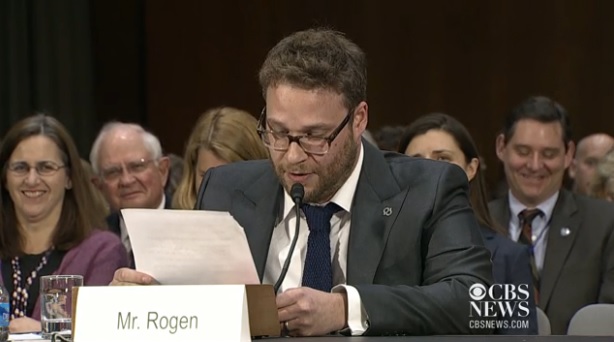
sethtestestifyDementia sucks for everyone. It is little understood and robs the afflicted of their memory, independence and usually in the later stages of their dignity.

When this journey started, I had to look up dementia versus Alzheimer’s. I will admit that I’m a little conflicted about how one type of dementia (Alzheimer’s) dominates the dialogue — regardless, I was pleased to see Seth Rogen’s approach to help shed light on the disease.

If you have been reading my blog, you know that I’ve had many situations that while tragic, were downright funny. This journey is hard, and humor helps.

To see Seth’s testimony, visit: Seth Rogen pleads with Congress over Alzheimer’s, slams low-senator turnout. Laughed. 

Some of the Funny Stories (upon reflection) include:

Call us Back so we can see if the Phone is off the Hook

Panty Raids in Assisted Living?

Someone Broke into your House?

Your Mom is not doing well in the Assisted Living Community

sunriseThe death of my father impacted my Mom cognitively. For years they were a team that managed their dementia by being together. Now my Mom’s alone with no wing man.

Her decline is escalating and unfortunately, she’s getting more combative. I’ve noticed this on my visits as we interact with others in the community — at least she is usually kind to me. However, she now believes someone stole a card set she used to run bridge games and this is causing grief for everyone. She has always tended to perseverate on specific topics and this month, it’s the bridge card set. My mom turned over the set to a woman to run the games but doesn’t remember and/or doesn’t like it on any given day.

I was called by the head of the community and they asked to have a meeting with me. They took me through a litany of events and issues and are worried that they are going to be unable to care for my Mom. She is refusing to take the prescribed medication, which includes a change to give her Lorazepam daily. Before, it was used as needed to reset her anxiety, but her behavior now has moved the recommendation to a daily dose.  

I ask for suggestions, my Mom can’t be the first resident they have faced they have trouble helping. The head of Assisted Living has decades of experience as well as do the collective experience of the other staffers at the meeting. They share the varied things they have done to try and help my Mom that have failed — many that worked for others. They have even tried a variety of new things given my Mom’s interests and mobility. The psychologist and the head of the dementia care unit have spent time with my Mom over the past few weeks and felt that unless she started taking the mood medication (Lorazepam), the community would be unable to help my Mom. The biggest difference with my Mom is her mobility.

If we can’t reset my Mom’s anxiety, and her behavior, they will put her on a 30-day discharge plan.

So here we are and the first step is getting my Mom to take her medication. I ask if they can just give her the 1 pill. It’s very small, she could easily take it and then they could reintroduce the vitamins and other medication that they believe are “essential.”  My Mom has never liked taking pills and resents that the staff watch over her while she is presented with 7 pills in the morning. Most of them are vitamins. I requested that they minimize the number of pills my Mom was taking several months ago, but the doctor felt strongly we should not make a change. She recently just refused to take any pills.

As my Mom continues to decline, it’s still surprising how many things she can do. However, her disease is moving her into a very negative place and we are struggling with how to best help her manage within her community. Just when you think you have a handle on the situation, it shifts and challenges you in new ways. Confronted. 

Please share your experience – positive or negative with different medications or a similar behavior.

Did you know we have a date for Dad’s burial?

dateAs I entered a holiday celebration at a girlfriends house, my phone is ringing. My Mom is calling me at 7:30 p.m. She hasn’t called me “late night” in over a month.

Kay: “Hey Mom. How are you?”

Mom: “Kay, Did you know we have a date for Dad’s burial? He’s gonna be buried next month.”

Kay: “Yeah.”  I’m a little dumb-founded. I hesitate to say anything and I don’t have to wait for my Mom to continue.

Mom: “We need to get all the other plans finalized. He doesn’t want a funeral, just a few people around his grave and a burial.”

Kay: “Okay Mom, E’s (my brother) is coming in town in ten days and he has offered to help with all of the planning for Dad.”

Mom: “What do you mean, I’ve planned it all. There is just going to be the burial. I already arranged it with Arlington National Cemetery. His plot has been picked out. What does your brother have to do with any of this?”

My Mom has not had any conversations with the funeral home, Arlington or the minister. We have continued to provide her with details when she was interested and taken her our driving tours of the cemetery.

This is the part where the record screeches (Internet connection is lost) and I struggle with the perfect way to manage this call. While my Mom can’t remember what she just did, she does keep some elements of memory. Most importantly, I recognize her need to do this final act for my father — at least be involved in the process.

Since my 20’s, my parents had written instructions for their funeral plans. They never changed, until about a year ago when my Mom started telling me they wanted burials, not funerals. I never really understood why and it wasn’t a discussion my Mom would engage. However, I felt the inner turmoil growing as I sensed this was going to be a problem. My only response was often that “a funeral isn’t really for the person that died, it’s for the people who are left behind.”

We are in the final stages of working out the funeral program, we will have at least 40 people just from the family in town, in additional to dozens of colleagues who have expressed interest in coming to the funeral. I hesitate to let the idea that Dad will just have a grave site burial settle into my Mom’s brain. Instead of lying, or trying to explain what’s been planned, I usually just stop talking about the topic and change the subject.

Thankfully, my Dad wrote up his plans years before the Alzheimer’s started to cloud his thinking. My mother-in-law reminded me, than even with well made plans — you may have to improvise. Her mother had picked out an outfit for her burial that she and her sister’s changed. It turned out that she would be buried in the middle of winter in North Dakota and the dress she choose just made her look cold. The story still makes me giggle.

We all need this event.

Personally, I need a funeral. I need to witness the full honors service he will get for his years of service to our country. I need to hear the preacher share the prayers, songs and remembrances at the funeral. I need to say a final good-bye. Desired.

If you have had good success in handling a situation like this, I’d love to hear from you.