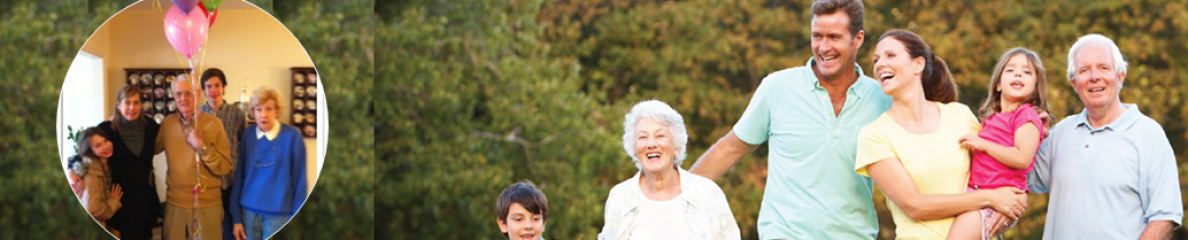
While our social lives are slowing down, now is a good time to work with your spouse, partner, family, and friends to build a roadmap of your important personal documents, asset details, and account information.
While I initially created this checklist for caregivers, I found it was incredibly useful to organize all of the information that surrounds my family. I also went from two drawers in a filing cabinet to one 2-inch three ring binder.
You can download a free copy of the checklist (and get a simple guide on what to save and what to shred) to put together a binder of your information. In my house it sits on the desk in our home office so everyone can find the information when it is needed.
I hope you will find it useful for you and your loved ones. Feel free to share this PDF. Given.
Staying at home has given me a lot of time for Spring Cleaning. I finally went into the last box of my parent’s papers this weekend and found this note from my Mom.
When my parent’s were still coming over for dinners on Friday and we recognized something was amiss, but were unsure what, my Mom asked if I would join her for the annual physical. She had mentioned that they were having trouble keeping up with the medicines and she was worried about my Dad … would I join? This was the note she gave me summarizing all of their medications. I attended and sat quietly and watched as concerns were raised and then mostly dismissed.
Within a year, my mom had a minor stroke and she readily accepted my rides to the doctor. However, this was the beginning of the trouble in some regards. My Mom was in disbelief that she had a stroke, and started to challenge that I was making it up. She began to debate me on the way to the appointments when I would simply report that we were going to see the neurologist. When she asked “why” and I reported it was because of her stroke, she would guffaw in disbelief. At the appointment, she argued with the neurologist. Good times. ; <
I wish I had know about Anosognosia. From the Stroke Connection: “Anosognosia (pronounced an-a-sog-NO-sia) refers to a person’s lack of awareness of their own motor, visual or cognitive deficits. It can happen in people with stroke, traumatic brain injury, multiple sclerosis, Parkinson’s disease, Huntington’s disease and Alzheimer’s disease.”
Looking back, I realize that even just stating that she has a stroke created an emotional response in my Mom that left her feeling like I did not have her best interests. She became very protective of her information and in return, insisted that she could manage her own affairs.
I learned over time that my parent’s responded with emotion to information or events. Any information citing they were unable to manage their own health and welfare pushed them into a defensive mode. If I arrived for a visit stressed, they would absorb my anxiety and we would have a terrible visit.
During this time my siblings and I watched as:
Their licenses were revoked and they continued to drive their cars;
They failed to pay their bills regularly and ran into issues with water and electricity;
Ultimately, their retirement community threatened to kick them out if they would not move from independent into the assisted living community.
I was ready in the wings when it was time to act, but it was more than two years before I was allowed back in to help. When I did re-enter I had learned a lot about how best to support and respond to my parent’s needs.
The current state of affairs may be a bridge that opens to invite you in to help. While many families are isolating themselves from their loved ones to protect them, others are including them in the shelter in place orders.
May you and your family find peace, joy, and common ground on which to move forward. Wished.
Please know that I am not a lawyer, but was a caregiver to my parents for over five years and offer this advice as a practical end-around to frustrations I faced trying to use the legal tools to help them.
While my parents listed me on their power of attorney, I had a devil of a time getting banks, insurance companies, and financial services firms to recognize it. It was less than 2 years old and Virginia has a statute in place that frees them of liability if they do recognize it (my simple non-lawyer explanation).
There are simple ways to set up a safety net for loved ones.
Instead of spending more hours fighting them (they received it but then didn’t do anything and then I would languish in their phone trees on hold), I worked with my parents to set up online access. In most cases I could do most things for them online.
As we enter this next phase of novel coronovirus and state and federal mandates, I am worried for the large numbers of older adults who don’t have someone who can step in and pay bills should they become sick.
Some things you can do today to prepare include:
Go to the bank with your loved one, and sign their power of attorney. It will put you on the account immediately. They may also offer to add you to the account, but this could be an issue since then you become a “joint account holder” that brings other possible complications and risks.
Set up online access to the account. You can do many things with online access and at minimum it will allow you to monitor the account or step in and help pay bills if your loved ones needs help.
It’s a shame that so many American’s do not have powers of attorney (POA) in place. I believe it should be a right of passage upon turning 18 to set up your first POAs. I did pay for my son to set up a Durable Power of Attorney, and a Medical Power of Attorney for his 18th birthday. I do hope I never have the cause to use them.
We are in strange times. I hope this gives you some ideas of how you can help should you need to step in and help a loved one who doesn’t have their estate plans in place.
If you have the time, now is a GREAT TIME to create POAs, and get a Will in place and have a discussion about the finances. To find a local elder care attorney, you can visit the National Academy of Elder Law Attorneys. Recommended.
I’m involved with many families who have a single adult parent with mild to moderate cognitive issues who wanted to stay at home. Now we are trying to manage care and minimize risk. What are you doing?
Kate Swaffer who was diagnosed with dementia over a decade ago, and before she was 50 sent me a link to a story she wrote Diagnosed with Dementia: What’s Next? wrote back in 2015. I hope that one sentence shares the many ways that even after a diagnosis, there are years, and even decades of productive life — she was diagnosed in 2008. See the bottom of this post for links to her books for purchase.
In the hopes of making this simple, I am going to summarize and layer in some thoughts from other readers, and the research, on things you can do to help drive your future. For several tasks, I hope you will collaborate with loved ones who will listen, support, and follow through on the plan you are working to create. Creating an action plan early can help you feel more control, and provide the tools to those around you to feel confident that they are doing what you want.
Ask your doctor(s) for and collect the following:
Your diagnosis. You should get this information from the physician who made the diagnosis. What is it? What are some symptoms? What are effective symptom management techniques? What might you expect in 1 year, 5 years, 10 years? What changes might you expect and how might you address them?
Clinical trial resources. Because so little is known and we don’t have a cure, would participation in a study offer benefits to you physically and emotionally?
Referrals to local support groups, programs, and day-programs for engagement. Learn and ask your doctor(s) about staying engaged both physically and intellectually and it’s impact on brain health maintenance.
Is there rehabilitation that would benefit you? From Occupational Therapy (OT), Physiotherapy, Speech pathology, Walking/mobility rehabilitation, Dietician, Psychologist, Social worker, Specialised fine motor skill rehabilitation, to counselling, including grief and loss as well as support groups.
Create your own care plan based on the recommendations and discuss with your loved ones:
How to help. Make it clear to those around that it’s important they recognize you in meetings where your health, your assets, and your living choices are being discussed.
What you like. Do you like walking? Playing games? Going to Yoga? What are some physical activities that you enjoy doing. If you stop driving, is there a way to help you maintain this activities?
What do you want to be known about your diagnosis? If you are still working, how might you discuss and how do you continue in a job if you have noticed some of the symptoms of dementia are presenting in your personal and professional life?
Who do you designate as your personal/financial and medical advocates. They may not be the same person. While many people designate a spouse, you need to have a plan B since the spouse could very-well predecease you. Sorry, I know that is a little grim. : <
Would you be open to engaging in local classes, workshops, and programs knowing that exercise and engagement can help minimize your cognitive decline?
Try out the Alzheimer’s Navigator (See Red Arrow).
One of things Kate Swaffer has done is help advocate for the rights, and abilities, of those diagnosed with dementia. Now is a good time to understand what you can do to best advocate for your future. Encouraged.
As the adult family caregiver named as power of attorney, I had an incredibly difficult time getting my Mom’s banks to recognize her power of attorney so I could officially support her. It was less than 2 years old, I provided the original, but since my Mom was alive, they wanted her to come with me to the bank and to sign their power of attorney documentation.
My Mom was so unsteady on her feet she needed a wheel chair. It was difficult and uncomfortable for her to go out. She never wanted to be in a wheel chair and half our journey’s out were battles over getting her to sit down. She was also incredibly frail and the task of just getting into the car would wear her out.
Wasn’t that the point of the Power of Attorney (POA)? I was very frustrated when the banks just failed to recognize my POA. In Virginia I could have pursued a legal suit … but I was already busy enough as my Mom’s family caregiver.
For years, I just used the online banking access to manage my parent’s finances. When I ran into issues, I would either have my Mom sign checks to move the money or just shut down the accounts. When USAA wouldn’t recognize the POA, I didn’t pay to renew my parent’s insurance and moved the account to a new insurance provider. There are some ways to end-around the roadblocks, but it seems ridiculous to have to out- maneuver the bank.
This past week, I walked into two banks to establish myself as Power of Attorney for a client. I need to get her past banking history since no taxes were filed since 2017, and need to be able to sign checks on the days when she is too weak to help. Remarkably, both banks (SunTrust and Wells Fargo) were extremely accommodating. I even had a note from the doctor stating she was unable to manage her own affairs, but did not have to provide it.
I learned two things:
You can’t have an active credit freeze. As Power of Attorney, they will create a new bank profile (requires a credit check) for you that is attached to the individuals bank account(s).
They view adult children differently than professionals that act as Powers of Attorney.
My logical brain understands this, but my journey as the adult child who was trying to help my parents DETESTS this varied treatment.
Maybe things are changing? Adult family caregivers … what are you finding? Curious.
THANKS to Ashley — Good food for thought and was a tactic I used when I was caring for my parents. Her lawyer suggested she not disclose the information to the bank. Thankfully, her parents added her to their bank account. After I hit a few roadblocks, I just set up online access to most of my parents accounts and did as much as I could digitally and in the spirit of their Power of Attorney. When I hit roadblocks and went to the bank with my POA was when I learned how difficult it was to get them to honor it.
After caring for two parents with dementia, I remind myself how much the checkbook meant to my mother. She had always managed the household finances and pointing out to her that she was failing to manage the finances was something that needed to be left unsaid. If you are concerned, first work with the person to support their efforts before suggesting they hand over the checkbook and finances. Some easy ways to help may be:
Create a monthly schedule of bills and maintenance due dates
Log in to the banking websites and credit card sites to monitor spending and confirm no fraudulent or suspicious transactions and fill in the bill pay gaps
Set up a checking account they can use that has a minimal balance to keep in their purse or wallet for writing checks and use a different account for bill pay needs
My mother kept losing her purse that included her checkbook. So dealing with that was very time consuming. My Dad recognized this and took me to the bank to set up a new checking account for my Mom. We funded it as she needed money but no longer had to worry that the account that received their retirement funds and paid for the mortgage was at risk. We automated many of the home bills (mortgage, utilities) and I would monitor the spending behind the scenes.
Utimately, I wanted to help but not be invasive or diminish my parent’s ability to manage their finances.
Some other tools to consider include:
Get a tile and insert it into the wallet so you can easily find it if it get’s misplaced. You can use their online portal to track it’s location.
Set up a TrueLink card. It is basically a pre-funded credit card where you can set up limits on how much can be charged as well as products and services that it won’t fund. There is a fee for it, but the small expense is worth the money it will most likely save in potential losses.
If you have a variety of personal care assistants coming into the home, or your loved one is in a community, I hope you will consider some of these options.
I have worked with families both at home and living in communities that have been a victim of caregiver exploitation. One got my client to write her a small check, one purchased some face cream for my client and asked her for repayment of $85, and another apparently kept asking for gas money. Most agencies and communities require their caregivers agree to never accept money or gifts from clients. Should a client give them money, it needs to be reported to the community or agency. In one month, I had to report three caregivers for violating this condition of employment. Sadly, I know they will just turn up at another agency.
Managing the finances for many may be one of the few remaining freedoms that offer a sense of control. Some are giving up car keys, volunteer activities they love, hobbies they can no longer maintain and the checkbook can offer an empowered sense of self.
If you have been diagnosed, or are a family member and unable to do this for your loved one, you can contact a Daily Money Manager who can fill this roll.
With billions at risk, take some time to ensure someone is minding the finances. I hope these options help you and your loved ones. Suggested.
A report released estimates that “almost all American retirees claim Social Security at the wrong time … which means they will miss out on a collective $3.4 trillion in benefits before they die.”
Oooaaaaffff. That hurts.
Especially when we are living longer and care costs are escalating. Most American’s don’t realize that many care costs are not covered by their medical insurance. Help in the home (dressing, bathing, eating, toileting) is not covered by medical insurance, but is why long-term care policies are offered.
The last year of my Mom’s life cost over $200,000 in 2015. That included the memory care community she lived in (it wasn’t super fancy, it was just the right community for her) along with the additional costs for a personal care assistant added up quickly. Unfortunately, my Mom was unsteady on her feet so we had to pay for additional care when she was awake so she didn’t keep trying to walk and then fall and end up in the Emergency Room.
Social Security offers a retirement calculator which I recently used with my sister. It made it easy to see when to turn on her benefits.
If you work with a financial advisor, I would contact them to learn how and when turning it on makes the best financial sense for you. Talk to you friends and family to learn how they made their decision. This is a situation in which talking about money and the choices we make can be great learning experience.
I am guessing that many of you share my fear of dementia. For those of us with loved ones who have lived with it, we know how devestating it is for the individual as well as the loved ones that surround them. But it doesn’t have to be. Once diagnosed, you have so much opportunity to direct, manage, and guide your life.
When the outcome wasn’t quite what you wanted.
I believe that the numbers reported are low because many people just don’t pursue a diagnosis. It is important to get a diagnosis for many reasons. The first is planning. If you know what you are facing you will be better prepared to plan the rest of your life.
As a Daily Money Manager who works mostly with individuals who have cognitive impairment or dementia, I know that not planning ahead or documenting personal wishes about future care and life choices most often results in guilt for those around you that will help. How will they know what you want if you are not explicit?
I know this after being the local adult child caregiver to my two parents with dementia. My parents had advanced care directives, but the most valuable guide for me in their care was the conversations we had around the dinner table. I knew that my parents wanted QUALITY of life over QUANTITY.
When my Dad was diagnosed with a tumor on the back of his tongue and in a moderate stage of Alzheimer’s, nothing in his care directives spoke to such an unusual situation.
When my mother broke her hip and the Doctor wanted to lift the Do Not Resuccitate order at the hospital to operate on her, I knew she would want me to tell them to let nature takes it’s course.
Ohhhh, but I still have guilt plaguing me about my decisions. I made the best decision I could at the time with the information I had.
The best way to ensure you get the care and support you want as you are living with dementia is to provide written (or video) of your specific care wishes. Use real-life sceanarios around you to tell someone what choice you would make if you were in a similiar situation.
Even if you have estate plans in place, now is the time to visit an attorney to update your plans. There are a variety things you can do to be an active driver for the rest of your life.
There are a wide variety of adults living well with a dementia diagnosis. Check out my favorite champion (who has gotten 3 advanced degress since being diagnosed more than a decade ago under the age of 50) Kate Swaffer https://kateswaffer.com/. Awed.
Many of us have been seeing a parent struggle with their memory and ability to manage their own affairs long before there is ever a diagnosis.
It took time for my Mom to adapt to having me pay the bills and help her. She felt that she was managing just fine. My Dad recognized she was having trouble and asked me to help. When I started I had trouble learning how to assist without offending my Mom. My Mom never recognized that the stroke she had impacted her memory or her ability to manage. She would tell me her “brain is bad today” but that wasn’t impacting her ability to manage her life (in her own mind). When I reminded her that she did have a stroke, she would accuse me of making it up.
I slowly worked to gain her trust by doing things in tandem that she asked for help on. I found the less I pushed, the more opportunity to help I was given.
When it came to the mail and the bills, I would take the piles of mail that were lying around and triage issues as I uncovered them. Thankfully, my parents added me to the bank account so I could reverse engineer many of their household finances. I visited with a large purse that allowed me to easily drop in piles that were dispersed around their home.
One day I walked in to visit, and my Mom had created a mail pile for me that included a bill and a check. She even put a label on the pile for me. Earned.
For those of us caring (or have cared) for parents with dementia, you should know there are a variety of factors that we can control that will reduce our risk.
The first is good news for those of us that worry that genetic factors have sealed our fate.
Association of Lifestyle and Genetic Risk With Incidence of Dementia (JAMA, July 2019) The study sought to determine if a healthy lifestyle was associated with lower risk of dementia, regardless of genetic risk. They found that a favorable lifestyle was associated with a lower risk of dementia among participants with high genetic risk. There is considerable evidence that individuals who avoid smoking tobacco, are physically active, drink alcohol in moderation, and have a healthy diet have a lower dementia risk.
The next study reports that higher levels of daily physical activity may protect against the cognitive decline and neurodegeneration (brain tissue loss) from Alzheimer’s disease (AD) that alters the lives of many older people. This was from researchers at Massachusetts General Hospital (MGH). Exercise offers protection against Alzheimer’s (JAMA Neurology, July 2019)
I noticed what a difference exercise made for my Dad who was diagnosed with Alzheimer’s. I worked to encourage him to get exercise, but it got to the point that the only way it worked was when I would challenge him to play Racquetball with me. He had a group of friends that he regularly met in the mornings, but after he fell on the Racquetball court and broke his hip, he was just unable to return more because he couldn’t manage to plan ahead and would not allow me to help. When I did get him moving he was just more communicative. I do need to add that he recovered from his hip surgery and was still able to beat me. While I could run, I just couldn’t outsmart his crafty shots.
I have also seen this with the older adults I work with. The more they are engaged with others and active, the better they seem to manage when it comes to working on daily finances and household chores. I have many that really want to stay in their homes but also don’t realize how isolating that can be.
The middle stage is hard to navigate as our loved ones think they are managing but are unable to recognize what they are not able to do or follow up on. If there is anyway to incorporate friends who can help them return to an activity they shared it will give them both a social and a physical boost?
The research has proven that we aren’t predestined to the fate of our parents if we have a favorable lifestyle. The good news for our loved ones is that exercise will help them even after a diagnosis. Let me know if you have had some success getting your loved ones that have been diagnosed moving again. Encouraged.